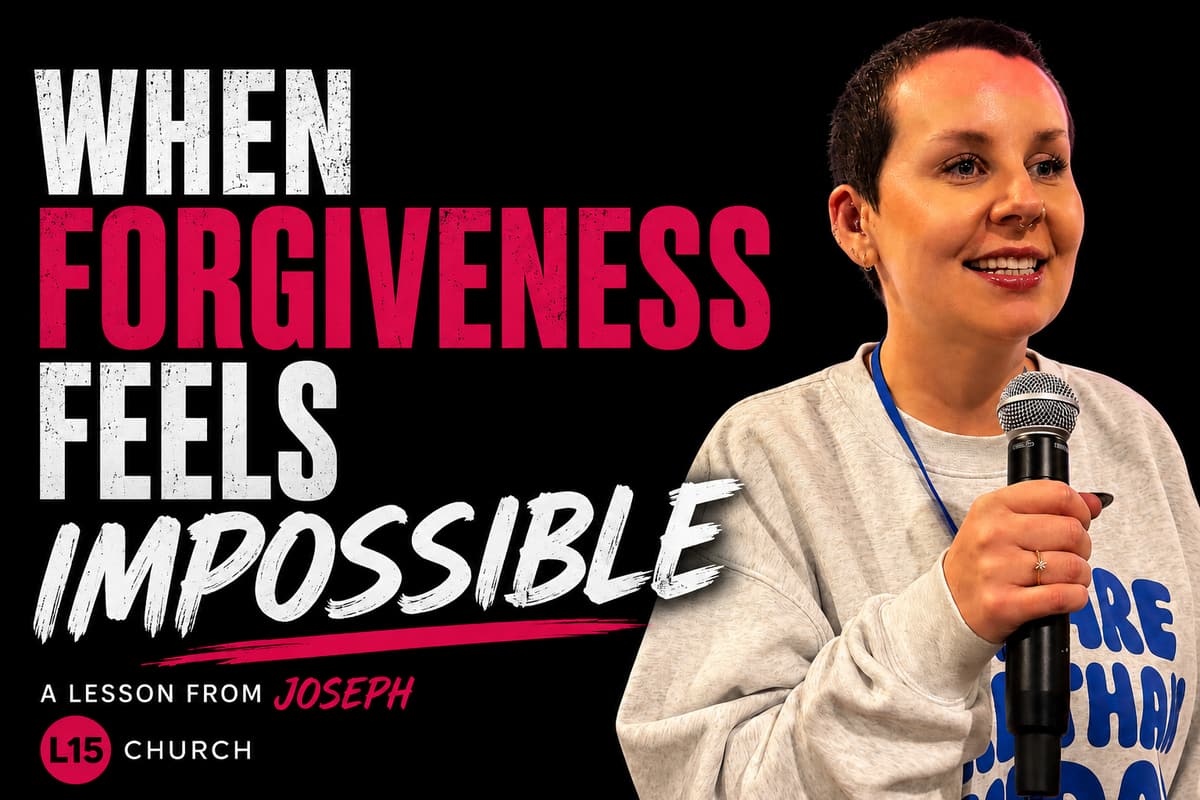
When it feels impossible to forgive
Summary
In this talk from the Becoming series, Caroline Muwaniri begins with a painful story: lies spread about her by someone she thought was a friend. Months later, seeing that person across a room, she realised she hadn't forgiven them. She'd only buried the hurt. Forgiveness doesn't mean you trust the person who wronged you. It means you trust God. In Genesis 45, Joseph can no longer hold back. He weeps so loudly that Pharaoh's household hears, and he reveals himself to the terrified brothers who sold him: "It was to save lives that God sent me ahead of you." Years later, Joseph doesn't gloat. "Am I in the place of God? You intended to harm me, but God intended it for good." Caroline is clear that what the brothers did was evil and not God's will, but God brought good out of it. Quoting John Stott, she describes spiritual growth as moving from thin skin and a hard heart to thick skin and a soft heart. Like Corrie ten Boom, we can forgive by trusting God with our hurt and our future.
Key points
- Burying hurt is not the same as forgiving. Sometimes the pain is still there and the work isn't finished.
- Forgiveness doesn't mean trusting the person who hurt you or giving them access. It means trusting God.
- Joseph forgave his brothers before they had done anything to deserve it, which was why they found it so hard to believe.
- What was done to you may be evil and not God's will, but God can bring good out of it (Genesis 50:20).
- Spiritual growth means moving from thin skin and a hard heart to thick skin and a soft heart.
Main Bible passages
- Genesis 45:1-15
- Genesis 50:15-21
Questions this talk answers
What does the Bible say about forgiving someone who hurt you?
- Joseph's story in Genesis shows forgiveness offered to brothers who had done terrible harm. Forgiveness doesn't mean pretending it didn't happen or trusting the person again straight away. It means trusting God with your hurt and your future.
Does forgiving someone mean I have to trust them again?
- No. Forgiveness means you trust God, not that you trust the person who wronged you or give them access to your life. Reconciliation and boundaries are separate questions, and it's wise to get help from mature Christians as you work through them.
What does "you meant it for evil, but God meant it for good" mean?
- In Genesis 50:20, Joseph tells his brothers that God used their harm to save many lives. It doesn't mean what they did was good or God's will. It means God can redeem even evil done to us and bring good from it.
How do I forgive when it feels impossible?
- You can't always manufacture forgiveness. Corrie ten Boom had to pray and trust God to forgive a former concentration camp guard. Start by being honest about the hurt, getting support, and choosing day by day to trust God with it.
About this talk
Forgiveness can feel impossible when the people who hurt us are the very people we struggle to face again. In Joseph’s story, we see how God can bring healing and freedom even after betrayal, injustice, and years of pain. Join us as we discover what Joseph teaches us about choosing forgiveness and trusting God with what happened to us.
Scripture
Series
Topics
Full transcript
Automatically generated from the video captions and lightly tidied, so expect the odd misheard word.
Couple years ago, found out that I there was some lies going around about me. And what really hurt at the time was that the person who was sharing these and was a Christian and was I thought my friend. And so, these people, this person had been in my home, had cuddled my kids, and you know, I thought we had a So, not only did it hurt because things were being said about me that was not true, but there was just betrayal. And there was confusion as well. And we had some wise older Christians and mentors who helped us navigate the hurt, prayed for us, prayed against bitterness, and prayed for how we would respond. And so, we did I did the work and I think it was about 6 months later I thought everything was cool, went to a conference and I saw them across the And my heart just dropped.
And I realized in that moment, because my body reacted before my brain even recognized who they were, I realized that the pain was still there, the hurt was still there. I hadn't forgiven them. I had just buried it down. I had buried the hurt deep and pretended and thought I'd forgotten about it. And so, that's that's where we're at with her. With Joseph.
And when he sees when he sees his brothers, let's see what he does. We What I realized after seeing that and experiencing that, and it shocked me as well, because I genuinely I convinced myself forgiven the wrong that was done to me, but I realized then I had to continue doing the work that God had called me towards and also have the proper understanding of forgiveness is that forgiveness doesn't mean that you trust the person who wronged you, but instead forgiveness means that you trust God. So, forgiveness doesn't mean that you allow access to the person who has wronged you, but it means that you trust God. There have been I have been lied about. I have been lied to. I have walked a journey with people in their 30s and 40s who have gone to seek out their birth parents and who have struggled with the hurt of rejection.
Yes, their adopted parents were amazing, and but they still always had that "Why didn't you want me?" That hurt, that pain. I have experienced difficult situations. I've experienced being caring about my kids and being in an unsafe family situation where we've Yes, love family members, but we've had to navigate situations and that's what Oz is going to talk about next week about forgiveness and reconciliation and boundaries and what that looks like. So, forgiveness doesn't mean you trust the person who wronged you, but forgiveness means you trust God. So, where are we? I did that too soon, so we can move on to the next one.
We already are, guys. We're in the room. So, we are in Genesis Then Joseph could no longer control himself before all his attendants he cried out, "Have everyone leave my presence." So, there was no one with Joseph when he made himself known to his brothers. And he wept so loudly that the Egyptians heard him and Pharaoh's household heard about him. So, I don't know if anyone here has had a panic attack. I've had a panic attack.
And so, thank you. And sometimes it's just a breathing thing. Sometimes it comes with weeping and crying. And as I was studying this, I was like, how is he crying? Is he crying in the way that my kids cry when they're having tantrum and they want something and they're Yeah, they could have stopped crying, but they're screaming louder or And then I was like, no, it's this it's this visceral overwhelm of emotions and you just can't keep it in and it's it's honestly And sometimes when I've had my panic attack, I'm I'm I'm the furthest edge of the house and I'm like, I hope my kids can't hear. Probably they can.
But that was what came to mind when I was reading this. I was like, wow, he's so overcome with emotion and he weeps so loudly. Now, what's he going to do because I know about me what I would do. Let's move on to the next one. Joseph said to his brothers, "I am Joseph. Is my father still living?" But his brothers were not able to answer him because they were terrified at his presence.
We don't know. We don't know if they ever considered where he was. Honestly, if they thought he was alive in Egypt, I don't think they would have You know, they wouldn't have They wouldn't have anticipated ever seeing him again. You know, I don't know whether they regretted it or thought about it again. But can you imagine their shock? Cuz they clearly didn't recognize him.
He had to reveal himself to his brothers. And they're looking at each other and they're like, So, now they're like, okay, this is Joseph. And now they're like, he's a second in command of Pharaoh. And now they're like, -oh. Okay, let's go to the next one. Then Joseph said to his brothers, "Come close to me." I don't think they wanted When they had done so, he said, "I am your brother Joseph, the one you sold into Egypt." I don't know if you remember me.
Yes, my name is Joseph. I'm the one you sold me into Egypt. Did you sell any of your other brothers into Egypt? I'm not sure, but I'm that Joseph. Let's go to the next one. And now, do not be distressed.
You probably could tell that they were worried. They were probably shaking. Do not be distressed and do not be angry with yourselves for selling me here because it was to save lives that God sent me ahead of you. Can you imagine? Can you imagine hearing this? You're shaking.
You're thinking. You're You're thinking not only of my life, but my family's life. These people The brothers are probably in their 60s or 70s at this time because Joseph was 39. So, they had families. They had livestock. They had land.
They're thinking of their dad back home, and they're thinking what's going on? And if And if we're killed, if we're put into prison, and now Joseph's saying, "Don't be distressed. It's okay. You know, don't be angry with yourself." Which they probably were already. They're like, "Dang it. It's It's It's Judah's fault.
So-and-so's fault. He's the one who came up with it." But it was to save lives that God sent me ahead of you. They're like, "What?" What is he saying? He's saying, "Okay, God is in this?" Let's go to the next one. "For 2 years now, there's been a famine in the land, and for the next 5 years, there will be no plowing and reaping. But God sent me ahead of you to preserve for you a remnant on earth and to save your lives by a great deliverance.
So, then it was not you that sent me here, but God. He made me father to Pharaoh, lord of his entire household, and ruler of all Egypt. Now, hurry back to my father and say to him, "This is what your son Joseph says. God has made me lord of all Egypt. Come down to me and don't delay. You shall live in the region of Goshen and be near me.
You, your children and grandchildren, your flocks and herds and all you have. I will provide for you there because five years of famine are still to come. Otherwise, you and your household and all who belong to you will become destitute. Now, they're sitting there and they're and they're and they're saying, "Okay, firstly, okay, now I've come to terms with the fact that the brother who I firstly wanted to kill, but then changed my mind and sold him, is now not only alive, he's second in command, now he's saying he forgives me, now he's saying he wants all of us to come and he's going to provide for us and he's going to look after us. This is This is so They're like, "What's going on?" next one. You can see for yourselves, and so can my brother Benjamin, that it is really I who am speaking to you.
Tell my father about all the honor accorded to me in Egypt and about everything you have seen and bring my father down here quickly. Ah, that's that's that's why Joseph is forgiving That's that's it, cuz of dad, okay? And next one. Then he threw his arms around his brother Benjamin and wept, and Benjamin embraced him weeping. Now, I was trying to get a little thing in there. Doesn't really work well work well.
But brother Benjamin, everyone would like to have a friend like Ben. Do you get it? Mike, did you get it? All righty. And he kissed all his brothers and wept over them. Afterwards, his brothers talked with him.
When Joseph's brothers saw that their Oh, sorry. Now we're now we go back for a second, sorry. that's chapter 45 of Genesis. And the passage that we're really going to be talking about is chapter 50. So basically what happens in between 45 and 50 is they is 17 years. So they have about two more sorry, three more Five.
Oh my goodness, math is not my strong point. Hopefully preaching is. But so we have five more years of famine and then 12 years where they're not only surviving, but then they're thriving. This is where Jacob and all his family, all of his herds and all of their livestock, everyone comes and they settle. And then Jacob and he but he meets his grandkids and he blesses them and he blesses everyone and then unfortunately he dies and then they bury him bringing him bring him back to Canaan and then that brings us to where we are in our passage in Genesis 50. So remember this is 17 years after the first time that Joseph revealed himself and forgave his And now their father is dead.
So when Joseph's brothers saw that their father was dead, they said, "Huh, what if Joseph holds a grudge against us and pays us back for all the wrongs we did to him?" So they sent word to Joseph saying, "Your father left these instructions before he died." And I see that continuing in the cycle of manipulation and deceit. Now that's unclear. That's my understanding of it. It's unclear because some scholars say that he might that Jacob they've been there long enough that Jacob might have had the conversations and they might have said, "Oh actually we did sell your son." But it does unclear from the passage, but that's my reading of it. So they sent word to Joseph Okay, there we go. Thank you.
"This is what you were to say to Joseph." And these are the saying, "This is what dad said." He may or may not have. "This is what you're to say to Joseph, 'I ask you to forgive your brothers the sins and the wrongs they committed in treating you so badly. Now, please forgive the sins of the servants of the God of your father.'" When their message came to him, Joseph it's unclear why he wept. Could it be because he had forgiven and forgotten and been enjoying these 17 years with his family that he never thought would happen And now and now they're saying now they're bringing it back up and he's like, "Oh, I'd forgotten about that. Wow, yes, I remember now I'm remembering all of the hurt and the pain and the Or is it because he's hurt and upset because you don't know my character? You're I said it I said I love you.
I said I forgive you. Look, we've been living alongside each other for 17 years and now you're bringing it up and thinking what I said was not right? And the only reason that I was I was forgiving you was because of dad? But you know what? That I think as well the reason why they started on this is because they probably didn't believe him the first time because it doesn't make sense because they're thinking with a human mind. They're thinking of human forgiveness, okay?
So, human forgiveness says, "You say sorry and you make amends. You say sorry and you make up for what you've done." Human forgiveness "There's an apology and there's reconciliation only after the work has been done." Whereas he has forgiven in the way that God has called him to forgive. So, the brothers did not do anything to deserve this for this forgiveness and they know and that's why they're so confused. His brothers then came down and threw themselves down before him. So, first they tried to appease him by sending this message and said, "Oh, your dad says, please forgive. Your dad says, please forgive your brothers." And then they go with they go and they humble themselves.
And they say and they say, "We are your slaves." they said. The brothers who sold him into slavery are now bowing down before him. And if anyone was here for week one, what does that remind you of? About 40 years earlier, little 17-year-old Joseph comes and he's sharing his dreams about his about his brothers bowing So, and now it's happening. And what did Joseph do? Did was Joseph like, "Ha?" Was it like, "I told you.
I told you this would happen." No. No. Joseph said to them, "Don't be afraid. Am I in the place of God?" "You intended to harm me, but God intended it for good to accomplish what is now being done, the saving of many "So, then don't be afraid. I will provide for you and your children." And he reassured them and kindly to them. It's almost verbatim, word for word, what he said the first time.
He's saying, "What you meant for evil, God turned around and made it for good." Why? Not only for you, not only for us, but for the saving of a great nation for other people. Now you can go to the next slide, don't worry. So, what the brothers did was evil. So, please don't mishear me. What the brothers did was evil.
They meant it for evil. Joseph is not saying what you did was good. No. Joseph is not saying that what you did was God's will. No. What Joseph is saying is that the evil that you did to me, the evil that you intended, God redeemed and made good of it.
So, the evil that is done to you is not good. The evil that is done to you, the hurt and the pain that is done willfully to you is not God's will, but good can come out of it. Good can. And that's what Joseph recognized and realized is that the evil that his brothers had done in the selling of him to Egypt and the evil that is done by Potiphar's wife, by the lies and going into prison, all of the time and the pressure and the practice of his gifts that were there when he was 17, then at the age of 39 to 45 or whatever, those were the those were the circumstances, the pressure that allowed him to cultivate and qualify his gifting so that he could save a nation. And again, what the brothers did was evil, was wrong, not of God's will, but he is seeing the good that God himself has brought out of So, we were at a leadership conference quite a few years ago and good friend of mine, he's now become a good friend, Pastor Jamie Corcoran, was teaching and he said, "To become a pastor, you need to have thick skin and a soft heart." Now, it's something that I do remember again and again and again and I think I would actually go a step further and say actually to be a Christian, to be a Christ follower, or to live for Jesus, you need to have thick skin and a soft heart. So, if you're in the room here today and you believe that you are living for Jesus, I'm calling you to have a thick skin and a soft heart thick skin believes the best in others.
Thick skin doesn't take the hurt. Thick skin Thick skin is generous with the benefit of the doubt. A soft heart doesn't close up the first time someone is mean. The closed heart believes the best in others until we're proven wrong. A soft heart doesn't take the offense that you made me and then blame the next person that I meet. Especially we see a lot of that in relationships.
If someone hurts you and then you move on to the next relationship, there's a lot of trauma and hurt in that. So, a soft heart says, "You know what? This is a This is a fresh slate. This is a new friendship. I'm believing the best in you until you prove me wrong." And so then I went down this rabbit And then I was like, "Okay, where did it really come from?" Because this is an amazing quote. I was like, "This is This got to be This has got to be someone." And it I mean I mean it was Jaden Smith, but anyways.
So, let's move on to I found out it was from a theologian called John Stott. And this is the original quote. The definition I love it. The definition of spiritual growth is grow going from having thin skin and a hard heart to having thick skin and a soft heart. So, when we're talking about spiritual growth, it's just like maturity. So, the definition of maturing as a Christian is going from having thin skin and a soft heart to having thick skin.
Sorry, it's going I'm turning into Pastor A. With my mumbling. The definition of spiritual growth is going from having thin skin and a hard heart to having thick skin and a soft heart. So, early on in ministry, there was one Sunday where I almost had the same conversation with three different people. Now, the offense and the exact circumstances were different, but essentially, each one of them had been And each one of them had been targeted and betrayed, and each one of them it wasn't actually their fault. And so, because there's nothing new under the under the sun, thank you, Ecclesiastes, I had the same words and advice for each of them, which is I stole actually from my friends and my mentors, older Christians who had poured into us when we were going through the same the same betrayal and same hurt.
And I gave it to each three of them. First was validation. Yes, you have been wronged. Through no fault of your own, did you have been wronged. Secondly, hope. God has got your back, and he sees everything.
And then challenging them with the to go on the journey and choose And that's the hardest part. You know, like as we're walking our Christian journey, like I appreciate the validation cuz sometimes I'm like, "Ooh, am I making too much of this? Is it my mountain over molehill?" You know, it's it's it's it's a navigation. So, getting you know, older mentors and other Christians who are wiser in on those situations to help is really Hope. God has got your back and sees everything. I mean, that is the hope that I have.
But the practical, the choosing forgiveness, it's hard because it means you can't sit in the trauma. You can't You can't sit in the hurt. You have to grow. You have to move. You have to do And so, I once again want to remind you that like the choosing forgiveness means you're trusting God. It's not meaning that you are trusting the other person.
When I had these conversations with these three people, it really resonated with two of them and they made choices and I saw them move from having hard soft skin and a hard heart to having a thick skin and a soft heart. And I've seen them grow on their spiritual journey and grow closer and closer to Christ. And there was one person who took it as an attack, took it as a as that I thought that they were in the wrong and unfortunately just decided chose to sit in unforgiveness. And it really was so bad and so destructive for that So, Nicky Gumbel puts it like this. Unforgiveness is like drinking poison and hoping the other person will die. So, when you sit in the unforgiveness, it's got nothing to do with the other person.
It's Remember, it's about do you trust God with your hurt? Do you trust So, when you when you when you when you wake up every day choosing not to forgive, it's like drinking poison and expecting that other person to die. Corrie ten Boom was a Christian watchmaker and she also helped to keep to hide a lot of Jewish people during the Second World War. She and her family ended up in concentration camps and she survived after the Second World War. She went around speaking at a lot of different conferences and places. And there was one conference she was speaking on.
And after her talk, a man walked up to her. And he extended his hand. And he said, "I was in your concentration camp. I worked in Ravensbruck. Please, can you forgive me?" And she speaks afterwards about how in that moment she knew she couldn't manufacture forgiveness. And she had to pray and she had to trust Because she knew that he had done to deserve her forgiveness.
He had been a part of the system and the institution that devastated that century. And so, she did forgive him. Not because of him, but because she trusted God. And so, I'm just going to finish on You may be hurting right now because of what someone has done to you. The lies that someone has spoken to you. The wicked ways that someone has treated you.
Whether knowingly un- or unknowingly. I'm not asking you to trust them. I'm not asking you to reconcile with them. I'm not asking you to forget and downplay the wrong that has been done to you, but I'm asking you to trust God. I'm asking you to trust God with your And with your future. And I'm and I'm praying that you become just what John Stott says, as we spiritually mature as we as we get closer and closer to Christ, that we become people with thick skin and a soft heart.
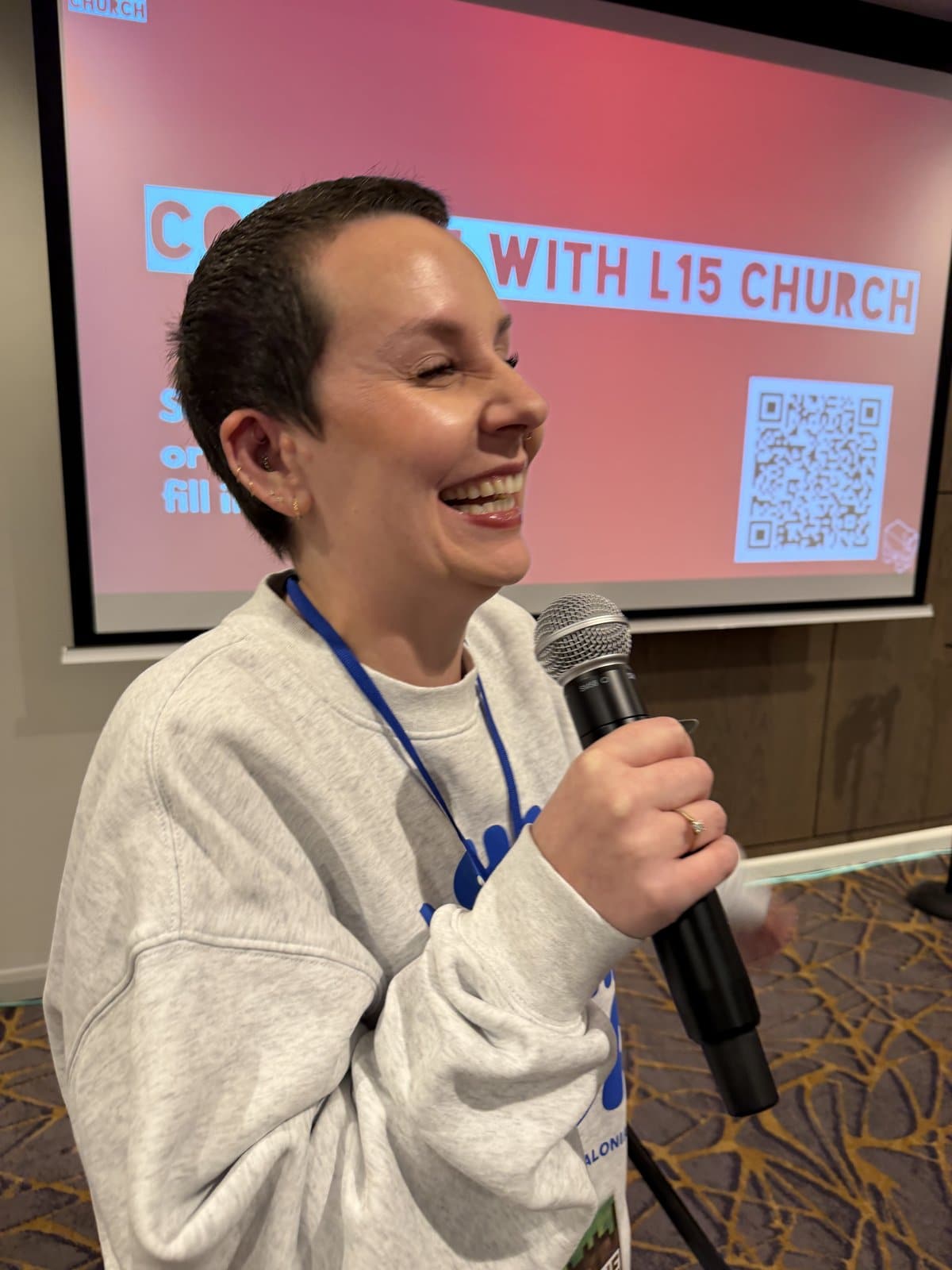
In Galway?
Come to L15 Church
Sundays at 11am at the Maldron Hotel, Sandy Road. Let us know you're coming and Oz and Caroline will be in touch personally. We'd love to meet you.