Calming Anxious Thoughts
Summary
This talk opens Mind Games, a series on breaking free from anxious thinking, anchored in Romans 12:2. Oz Muwaniri remembers a job interview at 22 where one of the interviewers fell asleep and started snoring halfway through his presentation, and the worry that came rushing in. He sets out three working definitions: worry is an unending focus on the storms of life, anxiety imagines those storms getting worse, and fear trusts in the power of the storm. He's clear that this is not medical advice, and that the Bible holds anxiety with nuance: Paul says "Do not be anxious" in Philippians 4 but admits to his own anxiety in Philippians 2. In Luke 8:22-25 the disciples cry "Master, we're going to drown" before they've drowned. When Jesus calms the storm he asks, "Where is your faith?" They had faith, but it was in the storm. Fear, anxiety and worry are misplaced faith. Jesus may not take every storm away, but he will take you through it. Oz finishes by inviting everyone to turn to Psalm 56:3-4 whenever fear rises: "When I am afraid, I put my trust in you."
Key points
- Worry focuses on the storm, anxiety imagines it getting worse, and fear trusts in its power.
- The Bible is nuanced: being anxious isn't simply a sin, and anxious thoughts shouldn't go unquestioned either. What matters is how we respond.
- Let Jesus set the direction of your life. Trying to set it all yourself feeds anxiety.
- "Where is your faith?" Fear and worry are faith placed in the storm instead of in Jesus.
- Jesus may not remove every storm, but he will take you through it. When you're afraid, choose to trust him (Psalm 56:3-4).
Main Bible passages
- Luke 8:22-25
- Romans 12:2
- Philippians 4:6
- Philippians 2:27-28
- Psalm 56:3-4
Questions this talk answers
Is it a sin for a Christian to feel anxious?
- The Bible holds this with nuance. Paul writes "Do not be anxious about anything" in Philippians 4, yet in Philippians 2 he admits to anxiety of his own. Feeling anxious isn't the whole story, and what matters is how we respond and where we put our trust.
What does Jesus calming the storm mean for me?
- In Luke 8 Jesus calms a storm and asks his frightened friends, "Where is your faith?" Their faith had drifted onto the storm. It's an invitation to put our trust in Jesus, who can take us through whatever we're facing.
What is the difference between worry, anxiety and fear?
- In this talk, worry is an unending focus on the storms of life, anxiety is imagining those storms getting worse, and fear is trusting in the power of the storm. Faith turns each of these around: focus on Jesus, trust him, and imagine a future in his hands.
What Bible verse can I read when I'm afraid?
- Try Psalm 56:3-4: "When I am afraid, I put my trust in you. In God, whose word I praise, in God I trust and am not afraid." It's short enough to read in under a minute, as often as you need it.
About this talk
Ever feel like your mind won’t switch off?
This message explores why we feel anxious, and how to find peace, even in life’s storms.
Looking at Luke 8:22-25, we unpack how worry, anxiety, and fear shape where we place our trust, and how that changes everything.
Join us this Sunday at 11am at the Maldron Hotel, Sandy Road, Galway.
There’s space for you here.
Scripture
Series
Full transcript
Automatically generated from the video captions and lightly tidied, so expect the odd misheard word.
I got my an opportunity to get my first proper job. I don't know why they call it a proper job because I had been working jobs before that but this was my first proper job. I guess it's a proper job because this is the area you have studied. So I'd studied to be an electronic engineer. I might not look it but sometimes I can be smart. So I studied to be an electronic engineer.
I barely passed but I passed and now I had an opportunity to go for an interview with this multinational company called Ericson. They do telecommunications. So I went for that interview and there were two stages and did I get the job? You got to have to wait. So I went for the interview and the first stage I aced it. Aced it.
Easy peasy. Then there was a second stage. So the second stage involved public speaking. It involved doing a presentation in front of people for about 15 or 20 minutes. So of course I started to get nervous because you know it's not every day that you just do a presentation for grown-ups really because I was just like 22. So I had to do this presentation and I went into this intimidating boardroom.
Like those boardrooms are intimidating. And there were these three grown-ups just looking at me and they say, "Okay, do your presentation." And it was on 3.5G. And at that point, it was like the latest technology. I don't know what we're on right now, 5G or 6G or whatever it is, but I had to do this So then when I was there, I thought I was doing okay. I thought I was holding my own. And then the worst thing that can ever happen to a public speaker happened to me.
One of the interviewers fell asleep on me. I didn't know was this a test where they tried to test me but then he started snoring. I was like this is not a test. And then the other people are looking at me going what are you going to do? I'm like, am I going to stop or am I supposed to wake him? Am I supposed to speak maybe louder, you know, in order to wake him?
So there I am. And by the way, I was only early in public speaking. So don't you think about sleeping on me right now. Like I actually asked my son to get me some water. So my tactic, if you sleep on me, I'm going to splash you with water and I'm going and then I'm going to name and shame you. I'm going to name your name.
So Kennedy, don't even think it. Don't even think about sleeping on me. But anyway, I'm at this interview. The guy is asleep and I could feel my worry, my just rise up in me. Like at that moment, they were like victori torrent rushing in on me. And I'm going, what am I going to do?
And I bet this is the same for you. In life, there are moments when you feel nervous, when you're worried, when you have fear. What are you meant to do? So, this brings us to our series. So, we're starting a brand new series that I am calling mind games. So, a series called mind games.
How to break free from anxious thinking and renew your mind. So, how to break free from anxious thinking and renew your mind. So, it's going to take us maybe about three, four, five weeks. I don't want to commit, but you know, it's going to take us you know, a couple sermons. And our anchor verse is 12:E 2. So, Romans 12 verse 2.
And this is a very good verse to actually Do not conform to the pattern of this world, but be transformed by the renewing of your mind. Then you will be able to test and approve what God's will is, his good, pleasing, and perfect will. So in this sermon today, we are going to be talking about worry, fear, and anxiety. And here's the thing. If you talk to any two people, you will get three definitions of what worry, anxiety, and fear mean. So, let me just clarify what I mean by those terms.
So, today's a little bit going to be a bit of preaching and a bit of teaching. So, today's a bit of combined. So, when I mean worry, worry for me is unending focus on the storms of life. I'm picking that because of the story we're going to be looking at. So storms of life are any troubles that come your way. Any whether they're real or perceived, right?
Whether that's health, whether that's relationship, whether that's school, whatever troubles that may come your way, whether that be bullies, whatever it is. So worry is when you have an unending focus on the storms of life. Then anxiety is where you imagine a future where these storms are just multiplying and getting worse and worse. So that one involves focusing, another involves your And then fear is when you trust in the power of the storm. So just have those words in mind, focus, imagination, and trust. And before we move on further, I got to give you two three disclaimers.
So the first disclaimer is I am not a doctor, nor do I play one on TV. I'm not a therapist. I'm not a psychologist. I'm not a scientist. So what I'm saying today is not for people to get on medication or come off medication. This is not medical advice.
That's not my lane. That is not my calling. My calling is I am a preacher. My primary responsibility is to preach and expound the word of God to you. Just think about this morning. If you came here this morning and we told you that there was no preaching today because I had done a hospital visit, I don't think you'd be glad.
Or if I come here and I say, "Oh, I didn't preach because I had to go somewhere and maybe even do a funeral or I had to go somewhere and do a house visit." All those things are important, but they're not the primary thing. The primary thing for myself and Pastor Caroline is to preach the word of God and equip the science. So that is Romans 12 taught us, you will be able by yourself to discern how to live God's word. And then the second one is when it comes to anxiety, they we need to be nuanced, right? Especially in church spaces. People like to be extremists.
They like to be on the extremes. So on one end of the scale, you have people who will tell you if you're a Christian, if you don't feel believe in God, you're not supposed to be anxious. 100% being anxious is a sin. That's an extreme that the Bible does not say. Another extreme is over here where people will say, "Oh, anxiety is just normal. It's a normal pattern and you never question the anxious thoughts or the fearful thoughts.
So, so these are all extremes. We want to be people of nuance. We want to be people who are in the middle ground because that's where the Bible holds it. It holds it in tension. Just let me give you an example. The Apostle Paul in Philippians 4:6 says this, "Do not be anxious about anything." So just read that first part.
Do not be anxious. That's very clear. Do not be anxious. However, the same apostle in the same letter in Philippians chapter 2, I'll give you a little bit of context what is happening here. His friend was sick. His friend was sick to the point of death and then he recovered.
But then this is what Apostle Paul said. Indeed, he was ill and almost died, but God had mercy on me and not only on him, but God had mercy on him and not only on him. Oh, I'm getting myself. And not on him only, but also on me to spare me sorrow upon sorrow. Therefore, I am all the more eager to send him so that when you see him again, you may be glad. And I may have less anxiety.
So the same apostle who's saying do not be anxious is also saying I'm anxious. So do you see how the Bible So which one is it? Do not be anxious or have a little bit of anxiety. It's both. It's nuanced. And it's not even about whether you should have anxiety or no anxiety.
It's actually more about how you respond to anxiety. And then here's the thing. These three as well are very interlin like worry, anxiety, and fear. Like they're so interlin you actually don't know where one starts and another ends. They kind of go together. And as well, it's an ongoing thing.
It's not like I once had an head anxiety and now it's gone. No, this is like a daily thing that you continually have to do. Choose not to be anxious or this is where you have to take steps to lessen your anxiety. So this is now where it will bring us to a Bible passage that we read earlier. So I, you know, before I start reading on it, I'm just going to I'm just going to give you a little bit of summary. What was this?
So Jesus was traveling with his disciples and they get into a boat, right? And then hits the boat. They also like they from the disciples point of view, they thought they were going to die cuz think about these were seasoned So for them to be scared, there was a problem. There was something to fear. And then they went and they wake up Jesus and say, "Jesus, there is a storm here." And Jesus just wakes up and Jesus does his thing, right? He just quiets the storm, you know, be quiet and the storm was no more.
So now let's just systematically sort of like go through this chapter. So in verse 22, one day he goes, sorry, one day he got into a boat with his disciples and he said to them, let us go across to the other side of the lake. So they set out. So I just want to leave it there and say, so Jesus sets the direction of where they were to go, right? He sets the mission. And can I just say sometimes the anxiety that we experience in life is because we are trying to set the direction of our lives.
Instead of Jesus setting the direction for your life, you try to figure out things for yourself. So I'm just going to go like on this next slide. I'll just say a little bit on it and maybe a different time we can talk about this and by the way like there's a QR code that's going to be going around like there's now just one QR code to rule them all. So if you press if you just link that one QR code you see everything else that's happening in the church. So in one of these QR codes is an area where you can submit a question. So, if there's something that's said in the sermon that you're not sure about or something you would want preached and talked about, you just go to that QR code and then just ask that question.
So in life there are these three things, purpose, calling, and assignment. And Jesus says them all. So, let me explain what a purpose is. Purpose is the meaning for your existence. Why you are here and it is the same for every single one of us. And to just to summarize your purpose is to worship God.
That is the purpose of why you exist. And as you worship God, you get enjoyment in life. You know your purpose is so you know you know in the old style people would say your purpose is to glorify God. So your purpose is to worship God. But calling has to do with your gifts. It has to do with the skills that God has given you.
So I'll use myself an as an example. So my purpose is to proclaim the word of God. It is to teach the word of God. And then assignment is different. Assignment is how your calling works out in life. So for instance, my calling is to expound the word of God to you.
But it doesn't mean I'll always be a preacher. It doesn't mean I'll always be a church planter. I could be doing it in your youth group. I could be doing it in the kids church. I could be doing it in a podcast. I could be doing it with my grandchildren.
You see, there are different assignments in And you need God Jesus needs to set the purpose, calling and the assignment. And I know so trying to do it on your own that can raise anxiety and sometimes trying to also figure it out on your own that sets anxiety cuz you might be here you know I don't know my purpose I don't know my calling I don't know my you just need to follow Jesus because he's the one who sets the course and then in 23 verse 23 as they sailed he fell asleep a squirrel came down on the lake so that the boat was being swarmed and they were in great danger. So, so, so here like when I was studying this passage, I was like, I can't quite relate that much with boats. I don't know about you. I don't know. Do you go sailing?
Do you travel? Do you cruise that much? Like, this doesn't quite make sense to me. So, I was like, okay, let me translate it for something that makes sense for us. And one thing that makes sense for me is like, have you ever been on a plane and the turbulence starts, right? Like you know it shakes a little bit and you just kind of look to the person to your right and to your left.
You're like is this it? Is this going to be the end? I'm telling you one of the best sounds you will ever hear. Do you know like that Ryan Air when you when you land and there's that trumpet? You're like, "Yeah, I'm safe." So it's like it's like when you have that turbulence in the air, what do you do? So when the storms of life hit, whatever they may be, right, we are all at various stages in life, whatever they may be, whether they real or perceived, what do you do in the in the disciples in verse 24, we see what the disciples do.
The disciples went and woke Jesus saying, "Master, master, we are going to drown." So, so I just love that. Master, we are going to drown. That's imagination cuz have they drowned yet? No, they have not drowned yet, but they've imagined drowning and they're worried. So, what are they? They're focusing on the storm and they're fearful because they're looking at the power of the storm.
And that's why that's why for instance in now when we when we when we're going to move on a little bit like why I called this sermon faith in the storm has to do with verse 25 because when Jesus rebukes the storm he asks this peculiar question right it's really peculiar if you think about it where is your faith so he quiets the storm and then he questions to them, where is your faith? So if I was to ask you right now, where is your phone? What would you say to me? Yeah, you would show me, right? Where are your keys? You would show me.
So that tells me you have the thing that I'm asking for. If I'm saying where is your phone, you have a phone. If I'm saying where is your key, you have keys. So if Jesus is saying where is your faith? They have faith but the faith is misplaced. The faith is not in Jesus.
The faith is the storm. They are having faith in the storm. And quiets the storm to point that your faith should not be in the storm but in Jesus. So another way you can say fear, anxiety and worry are misplaced faith. They are misplaced faith. Why do I say that?
Think about the ingredients of faith. What are the ingredients of faith? Trust. They trusted in the power of the storm. You could put your trust in Jesus. Focus.
They were focusing on the storm. You can focus on God's word. You can focus on Jesus. Imagination. You need to have imagination that all will be well in the future. All those are elements of faith.
I know elements is misspelled. My kid will tell me later. So all those are elements of faith. So here's the thing. What is faith? Faith is trusting in the power of something greater than yourself.
So faith isn't trusting something in the power of something greater than yourself. But that something has to be Jesus, not the stones. I know maybe right now it's hard to pay the rent. I know right now you're trying to find the love of your life so that you could get married, but you cannot find him. I know right now maybe you might be struggling to just make ends meet. You might be struggling to get a job.
You might be struggling just to raise kids. Your health right now might not be the best. You were not what you once were. But your focus should not be on those storms of life. Your focus should be on Jesus. Why?
Because he's already demonstrated that he can take away the storms. And here's the thing. I'm not saying that Jesus would take all the storms away, but you can trust that even that if he does not take away the storm, he will take you through the storm. You know, at times, right, there are storms that Jesus puts in our lives and we don't know why he's done it, but you should still trust him. It's it's it's like when I go to my kids sometimes when we will take them to hospital and they need to be in hospital for a while and they need to have medication. They wouldn't want to take the medication because they don't understand why they need the medication.
But you just say to them, you don't need to understand. You need to trust me. You need to trust the doctors. And here's so that's the thing. The storms of life, they might not make sense to you. You might not understand, but you need to trust that Jesus would take you through it.
And at times you might actually get a glimpse for why a particular storm happened. I'll tell you a story many years ago one of our children had a health issue there was just an issue dealing with so we take them to the doctors so that the doctors will would just look at this. These were the storms of life. It wasn't pleasant to have it. But because of that storm, the doctors were able to pick up another sinister issue that was worse than the first that they were now able to deal with. But if that first storm had not happened, we're not we would not have seen the worst issue.
So that's just one example of why the first storm was allowed. So, I'm just saying we might not know why all the storms in life happen, but you were still to trust in Jesus. And here's the thing. I don't know if we're able to go to the previous slide of where you decide. So, so, so this is a choice thing. Where you decide to put your faith shapes the level of your fear, anxiety, and worry.
So, it's about where you to put your faith. Are you going to put it in the storms, in the doubts, in the worries, or are you going to put him in Jesus? I'll just tell you a story that this that's ongoing. For instance, when it came to planting this church, there were so many fears, so many worries, so many anxieties. And people be talking to us and going, "Are you sure? Are you sure this is what God wants for you to do?
What about if it fails? What about if it doesn't work out? Do you think you're cut out for this? Do you think you have this calling? Do you think you have these blessings?" So, there are all these worries. And sometimes I will like wake up on a Saturday morning and I'm like, "Oh, dear heavenly father, is there going to be anyone tomorrow?
Is there going to be anyone in church tomorrow? Were those people right? But here's the thing. Do I put my faith in those worries or do I put them on Jesus? And I go, it is you, Jesus, who set the course. Remember, he says the purpose, the calling, and the assignment.
So just go to Jesus and say, I will trust you and I will walk this road of obedience. And here's the thing, Jesus just wants you to be obedient regardless of how things happen. Jesus wants you to be obedient and have faith in him. And so the thing that I would love for you to do this week, I know that anxiety is going to come. I know worries are going to come. I know fear is going to come.
This is just a matter of life. But I want you to do this each time it comes. Like you really do this exercise. I'll be calling you guys to just make sure that you're actually doing it. When it comes, I want you to open Psalm 56. So just in your smartphone, just have Psalm 56.
And Psalm 56 just has about 11 verses. It's very short. It's very short. You can read it in probably less than a minute. But I want you to focus on three and four and it gets re repeated later. This is what David said when he was in the middle of worries.
Actually, he was like in the Philistine country and they were about to kill him. So, he was worried, he was anxious, he was fearful for his He penned the psalm and he said, "When I am afraid," you can put, "When I'm worried, when I'm anxious, when I'm fearful, I will put my trust in you." You see, it's it's it's a decision. It's a choice. It's continual choice. I will put my trust in you. In God whose word I praise, in God, I trust and am not afraid.
What can me immortals do to me? You see, this is a daily thing. This is an hourly thing. When the nerves, the stress, the anxiety come, and here's the thing. These they are real. They are real.
If you have lived on this earth long enough, you will feel the storms of life. What are you going to put your trust in?
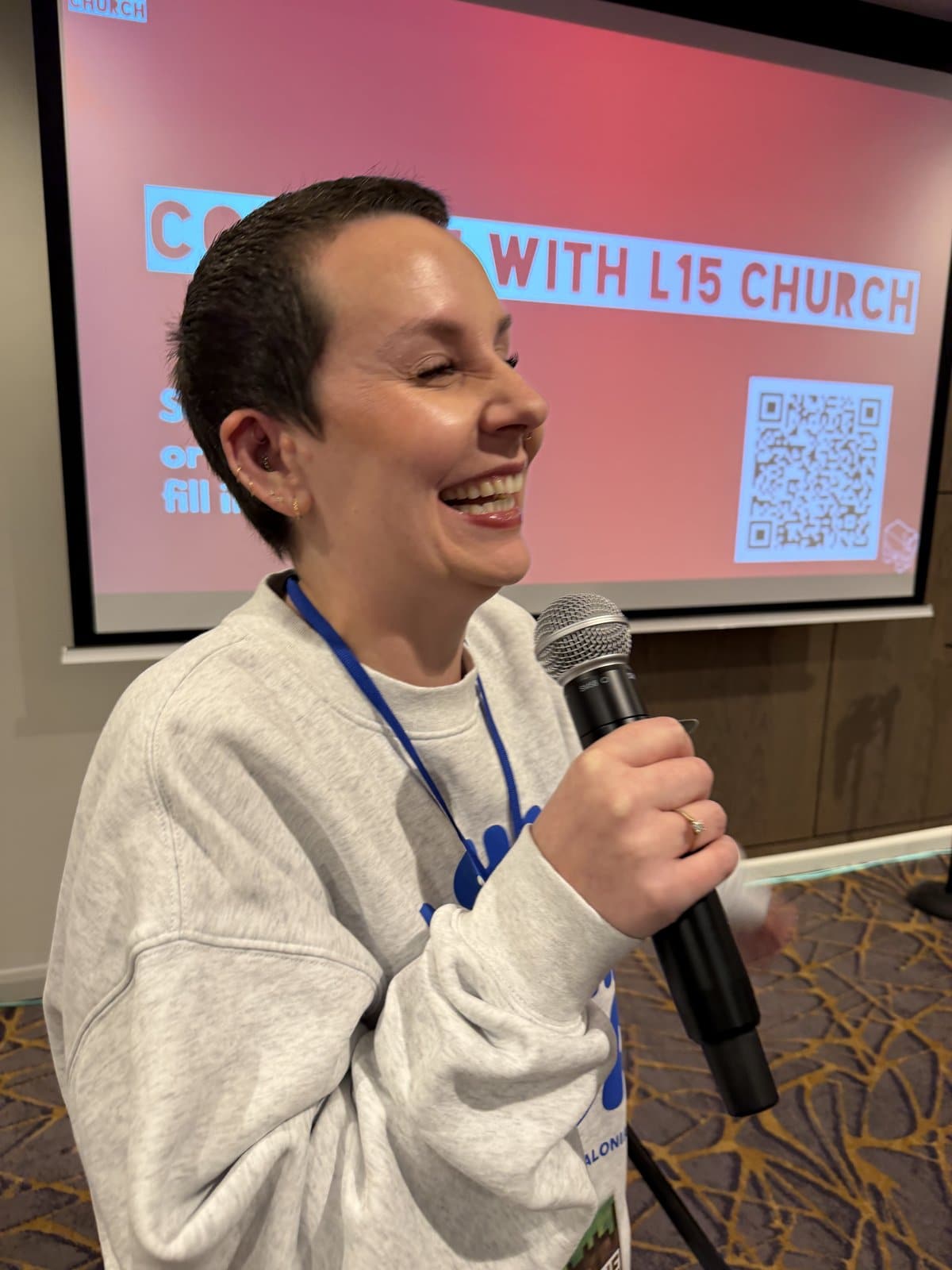
In Galway?
Come to L15 Church
Sundays at 11am at the Maldron Hotel, Sandy Road. Let us know you're coming and Oz and Caroline will be in touch personally. We'd love to meet you.